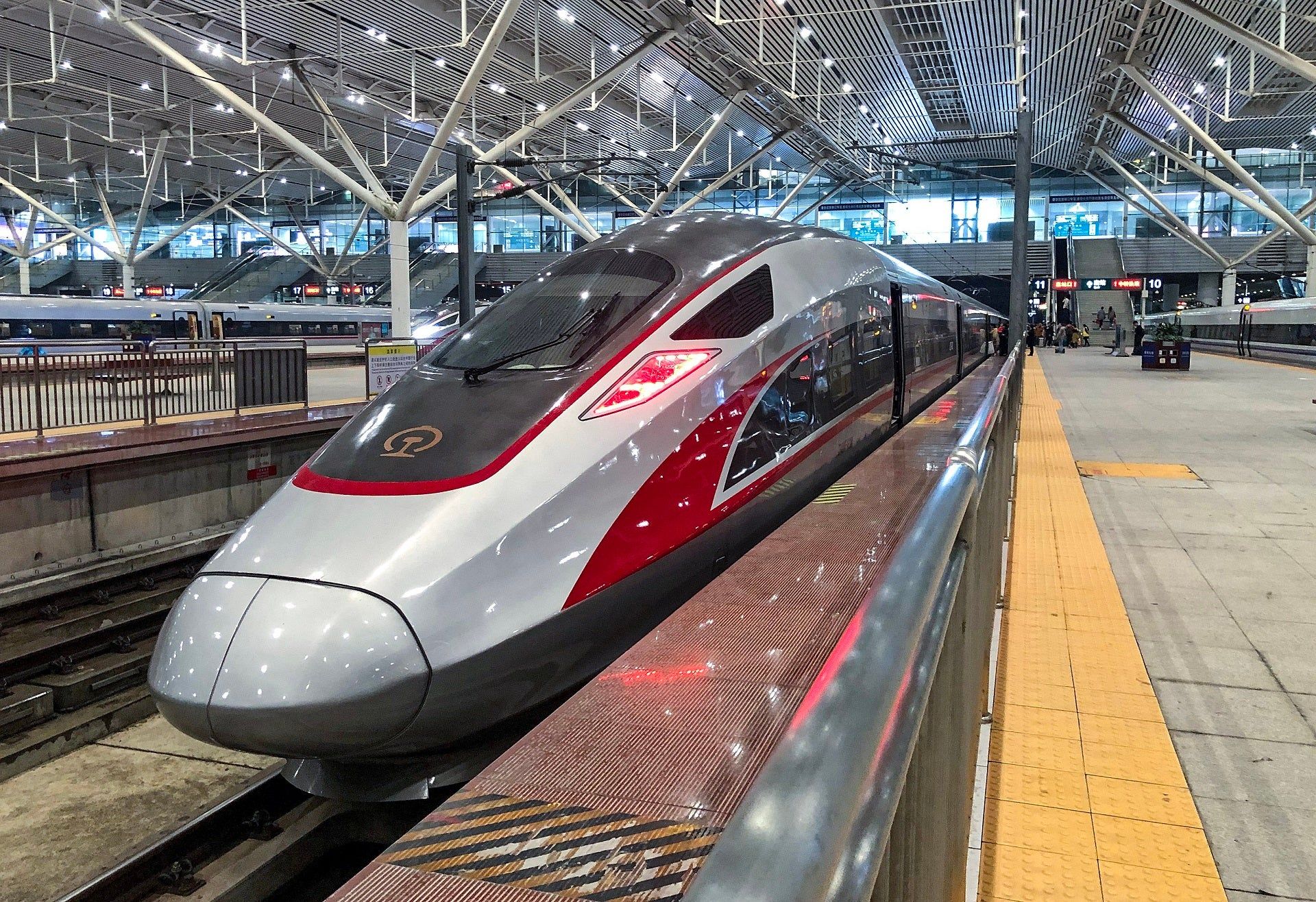
Indonesia’s Transport Minister recently confirmed that safety is the top priority over the planned commercial launch of the country’s $7.3 billion high-speed railway project. This railway, a key project of President Joko Widodo, is backed by China and has been delayed for several years.
Being part of China’s Belt and Road Initiative, the 142-kilometre railway is engineered to link Jakarta and Bandung. The project, set for completion in 2019, encountered various problems such as land procurement issues, the ongoing COVID-19 pandemic and a $1.2 billion cost overrun.
The railway is being constructed by a consortium composed of Indonesian and Chinese state companies called PT KCIC. They recently postponed the planned free trial run by roughly two weeks to September 1 to address safety issues. While the target is to commercially launch the railway by October 1, Transport Minister Budi Karya Sumadi admitted these dates are not firm, reflecting that safety remains paramount.
“The president has advised me to avoid rushing the project. His primary concern is safety, given that this is the first high-speed train in Indonesia and ASEAN, and it employs advanced technology,” Budi revealed, referring to the Association of South East Asian Nations.
Presently, the ministry is conducting safety tests, a detail the minister emphasized whilst drawing attention to the complex nature of this project.
During a recent meeting in China, Chinese President Xi Jinping stressed to President Widodo the necessity for both nations to ensure the project maintains high standards as it approaches completion.
“Any resultant delay will adversely impact the income of the project operator, with potential implications for financial ratios. Nevertheless, as engineers, our main focus is on safety, a factor the president has given careful consideration,” stated Budi.
KCIC is grappling with the financial implications of the project’s cost overrun, particularly with one of the consortium members, Indonesian company PT Wijaya Karya (WIKA.JK), experiencing its own debt issues.
Discussions are currently in progress for an extra $560 million loan from the Chinese Development Bank to complete the remaining construction work.
The cost escalation has led to speculation on whether ticket prices would need to be set higher to guarantee a return on investment.
Budi revealed that they plan to set the train fare at 250,000-300,000 rupiah ($16.44-$19.72), which is lower than the estimated 350,000 rupiah without government intervention. The fare is expected to be subsidized by the consortium’s leader, PT Kereta Api Indonesia, an Indonesian railway firm.
However, this price is still double what a tourist would typically pay for a journey between the two cities on a conventional train.
According to Budi, “We hope the subsidy can achieve a price that customers find acceptable.”
[sourcelink link=”https://www.reuters.com/world/asia-pacific/indonesia-says-it-must-prioritise-safety-delayed-china-funded-bullet-train-2023-08-11/”]