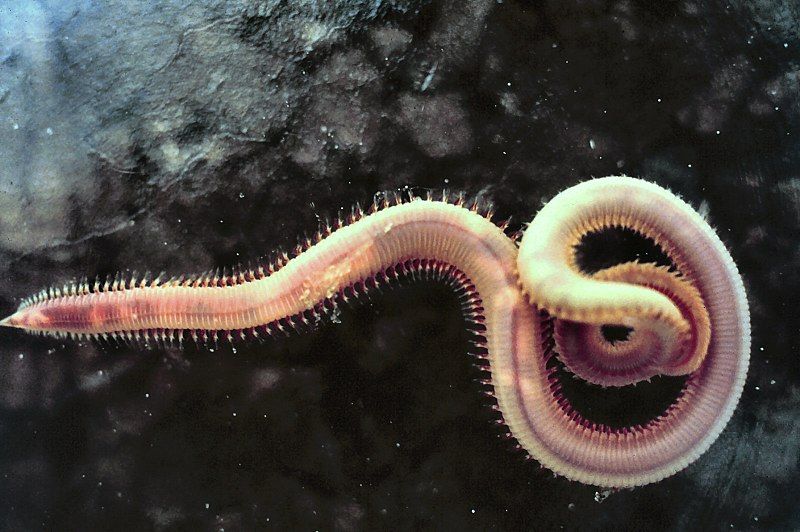
Nematodes discovered in Siberian permafrost, according to an international team of researchers, are 46,000 years old and used survival strategies resembling those of a current lab favorite.
Nematodes appear to be simple roundworms at first glance, but don’t underestimate them.
Scientists reported in 2018 that they had identified and brought back to life two kinds of microscopic nematodes that had been preserved in Siberian permafrost, with an estimated age of 42,000 years. New research on these roundworms suggests that one of these nematode species is a novel species that has been named Panagrolaimus kolymaensis after the Kolyma River where it was discovered.
The new study, which was released on July 27 in the journal PLOS Genetics, also compares the Siberian worm’s survival strategy to that of Caenorhabditis elegans, a different nematode species that is a model organism used in labs all over the world.
Teymuras Kurzchalia, a cell biologist emeritus at the Max Planck Institute of Molecular Cell Biology and Genetics in Dresden and a study co-author, says, “The radiocarbon dating is incredibly accurate, and we now know that they really survived 46,000 years.”
According to Ann Burnell, an emeritus biology professor at Maynooth University in Ireland who was not involved in the new study, Panagrolaimus species are recognized for thriving in conditions that often expose them to desiccation or freezing.
If the worms are as old as the study claims, they would be the most amazing examples of a phenomenon known as cryptobiosis—an organism’s capacity to halt its own metabolism amid unfavorable circumstances.
[sourcelink link=”https://www.telegraph.co.uk/news/2023/07/27/stone-age-worms-brought-back-life-defrosted-siberia/”]