As a generation of scientists who grew up watching Star Wars, it is evident that there is a noticeable absence of C-3PO-like droids in our daily lives. The lack of humanoid robots equipped with common sense to assist us in our homes and workplaces is disappointing.
However, the rapid advancements in artificial intelligence (AI) are poised to bridge this gap. Alexander Khazatsky, a machine-learning and robotics researcher at Stanford University in California, believes that we may soon witness the realization of these sci-fi visions thanks to AI progress. It is conceivable that future generations will experience a reality where intelligent robots are integrated into our daily lives.
Several prominent technology firms, including OpenAI and Google DeepMind, are now focused on integrating versatile learning algorithms, known as foundation models, into robotics. The goal is to equip robots with common-sense knowledge, enabling them to handle a wide array of tasks efficiently.
Many experts anticipate rapid advancements in robotic capabilities, with Gerard Andrews, a robotics marketing manager at Nvidia in California, describing this moment as a significant turning point in the field. In March, Nvidia introduced a general-purpose AI model specifically tailored for humanoid robots.
Simultaneously, robots have the potential to enhance AI capabilities. Numerous researchers believe that incorporating a physical experience into AI training could bring them closer to achieving ‘artificial general intelligence’ – AI with human-like cognitive abilities for any task. Akshara Rai, an AI researcher at Meta in Menlo Park, California, asserts, “The final frontier of true intelligence must involve physical intelligence.”
Despite the enthusiasm surrounding the integration of AI into robotics, researchers urge caution.
Many of the remarkable demonstrations are just that – demonstrations, often presented by companies seeking publicity. Rodney Brooks, a roboticist at the Massachusetts Institute of Technology in Cambridge, points out that the journey from demonstration to actual deployment can be lengthy. Brooks, who founded iRobot, the creator of the Roomba autonomous vacuum cleaner, emphasizes the importance of managing expectations in the advancement of AI and robotics technologies.
Numerous obstacles lie ahead in advancing robotics, such as the challenge of gathering sufficient, relevant data for machine learning, overcoming issues with finicky hardware, and addressing safety concerns. According to Harold Soh, an expert in human-robot interactions at the National University of Singapore, there is a need to investigate foundation models for robotics. However, he remains doubtful that this approach will result in the predicted revolution in robotics as anticipated by some researchers.
The term “robot” encompasses a wide array of automated devices, ranging from robotic arms used in manufacturing to self-driving cars and drones utilized in military operations and search and rescue missions. Many of these devices utilize some form of artificial intelligence to enable tasks such as object recognition.
However, they are also programmed to perform specific functions, operate within specified environments, and may require varying levels of human oversight, remarks Joyce Sidopoulos, co-founder of MassRobotics, an innovation center for robotics firms based in Boston, Massachusetts. For instance, Atlas, a robot developed by Boston Dynamics in Waltham, Massachusetts, which gained fame for demonstrating its parkour abilities in 2018, operates by meticulously mapping its surroundings and selecting optimal actions from a predetermined set of templates.
“In the realm of AI research venturing into robotics, the aim is to develop highly autonomous and versatile systems capable of functioning in diverse environments. This journey may commence with the creation of robotic arms proficient in ‘pick and place’ tasks within a factory setting, but progress towards humanoid robots offering companionship and assistance to the elderly, among other potential uses. Sidopoulos notes, ‘The possibilities are numerous.'”
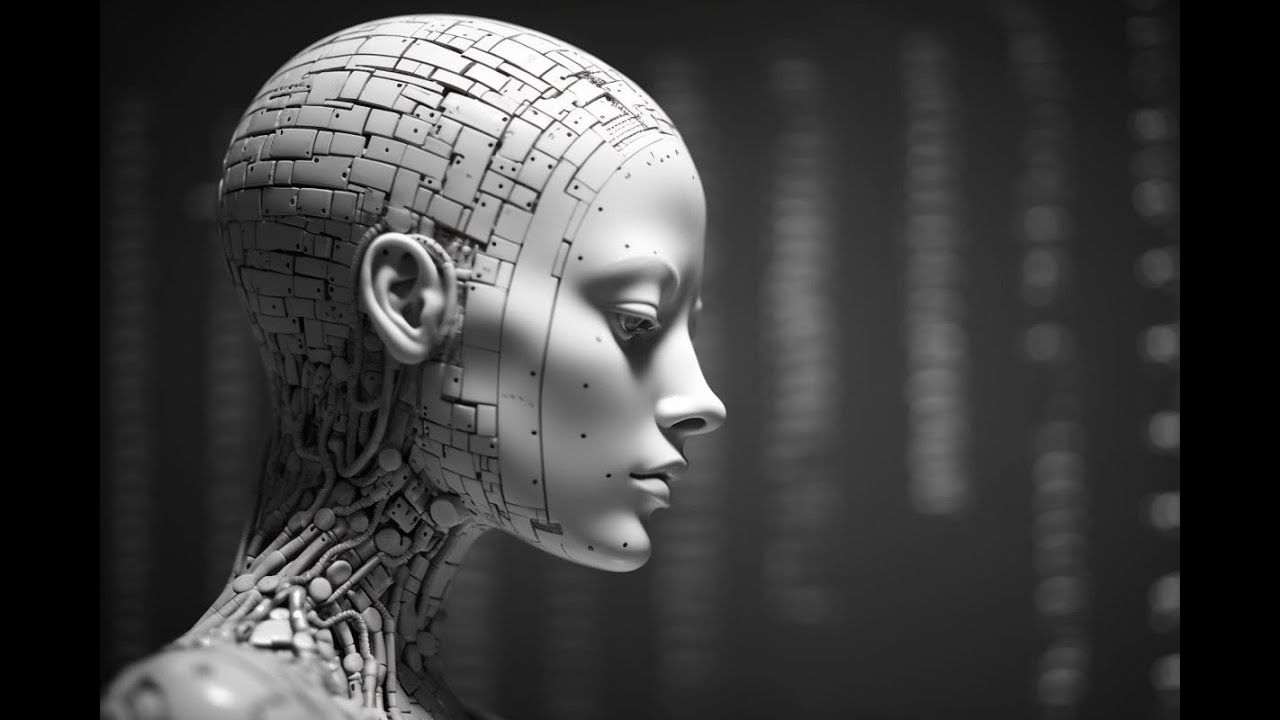
The intricate nature of the human form may not always be optimized for specific physical tasks; however, it is perfectly crafted for navigating the designed world. A robot designed in the shape of a human would possess the ability to interact physically with its surroundings in a manner similar to a person.
Nevertheless, the task of controlling any robot, especially one shaped like a human, is exceedingly challenging. Tasks that appear simple, like opening a door, actually involve a myriad of complexities. A robot must comprehend the mechanics of different door types, determine the necessary force to apply to a handle, and maintain balance throughout the process. The real world presents a diverse and ever-changing environment that adds to the difficulty of robot control.
[sourcelink link=”https://www.nature.com/articles/d41586-024-01442-5″]