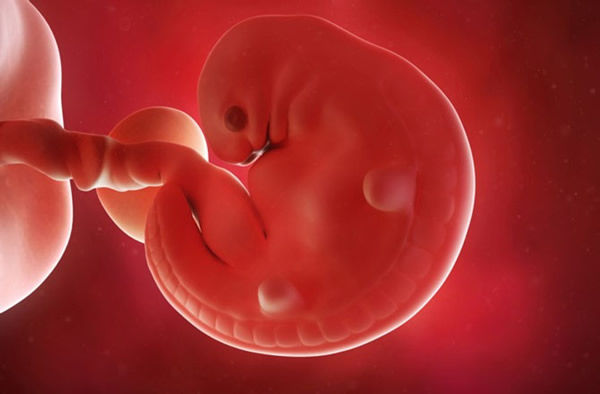
Researchers have made another step toward creating transplantable human organs by successfully growing kidneys within pig embryos comprised primarily of human cells.
The findings, which were published on September 7 in Cell Stem Cell, are a first since they show the growth of a substantial humanized organ inside of an animal.
Tao Tan, a cell biologist from the Kunming University of Science and Technology in China who was not involved in the current study but was instrumental in the creation of the first chimeric human-monkey embryo in 2021, thinks that this is a significant advancement in human-animal chimerism.
Currently, there are more than 100,000 people waiting for organ transplants just in the United States. Most of such folks require kidney transplantation. Scientists have been looking for novel ways to grow organs and tissues in animals in order to meet the need for life-saving organ transplants.
In the past few years, developments have included the ability to grow rat organs in mice (and vice versa) and humanized skeletal muscle and endothelium tissue in pigs. But there are still big obstacles, partly because it’s hard for human cells to survive inside a foreign host. Because the cells of different species have varied physiological requirements, human induced pluripotent stem cells, or iPSCs, frequently perish when introduced into animals. They serve as a sort of “starter kit” for generating numerous types of human tissue.
Liangxue Lai, a stem cell scientist at the Guangzhou Institutes of Biomedicine and Health in China, and his group spent more than five years perfecting their techniques to increase the viability of human stem cells.
The team edited away two kidney-related genes using the gene-editing technique CRISPR/Cas9 while the pig embryos were still only single cells. When the human iPSCs were put into the area, it established a niche where they could grow into kidney cells. In order to keep the human stem cells alive long enough to establish a footing and start producing the kidney, the human stem cells were additionally modified to have particularly active genes that inhibit apoptosis.
Then, more than 1,800 embryos were implanted into surrogate sows, and five of them were removed for research within the first 28 days. The kidneys of all five animals were typical for their developmental stage and included between 50% and 60% human-derived cells. Tan claims that this is the largest proportion of human cells that has ever been found in an organ developed inside a pig. There is no reason to believe that, given more time, the kidneys wouldn’t continue to grow and mature properly, perhaps with human cells gradually displacing pig cells, according to the researchers.
[sourcelink link=”https://www.technologynetworks.com/cell-science/news/humanized-kidneys-grown-in-pig-embryos-in-world-first-378557″]