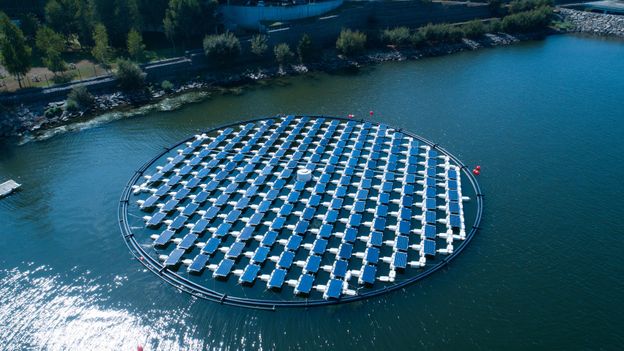
In order to maximize the sun’s energy output, a new solar power plant prototype is tracking its movements as it bobs above a sizable lake in southwest Netherlands. The artificial island, named Proteus after the Greek sea god, is a 38-meter-wide circular system made of 180 interconnected modular panels that, according to BBC News report, not only generates about 70 kilowatts of peak power (kWp), but also makes the most of its location by slowly following the sun’s trajectory as it arcs across the sky.
Proteus’ onboard technology enables its double-sided panels to flip in synchrony with the sun’s movement in order to consistently create as much solar electricity as possible, much as how flowers change positions as the day goes on. As a result, according to SolarisFloat, Proteus can produce up to 40% more energy than stationary arrays on land. Another advantage is that because the air beneath it is water-cooled, it can sustain lower temperatures than counterparts on land.
However, a sun-tracking solar farm has several restrictions. Location is important, as the panels would essentially remain horizontal throughout the day anywhere near the equator, negating the value of Proteus’ onboard tracking devices. Additionally, the system would need to be built in regions with favorable weather and relatively lesser tidal currents.
However, initiatives like Proteus may be able to assist in overcoming one of the main obstacles to the broad adoption of solar energy—the relatively enormous amounts of space that panel arrays need to capture their energy. According to one study from Leiden University in the Netherlands, solar farms require land that is between 40 and 50 times larger than that required by coal plants and 90 to 100 times larger than that required by gas providers. As the world continues to move toward entirely renewable energy, land values will only rise, making it probable that solar installations will face competition from other essential uses like sustainable farming and forest seeding.
A reasonably easy, efficient solution to make room for all the necessary projects needed to fend off the worst consequences of climate change could be to build solar farms on top of water bodies that are otherwise underused.
[sourcelink link=”https://www.bbc.com/future/article/20221116-the-floating-solar-panels-that-track-the-sun”]