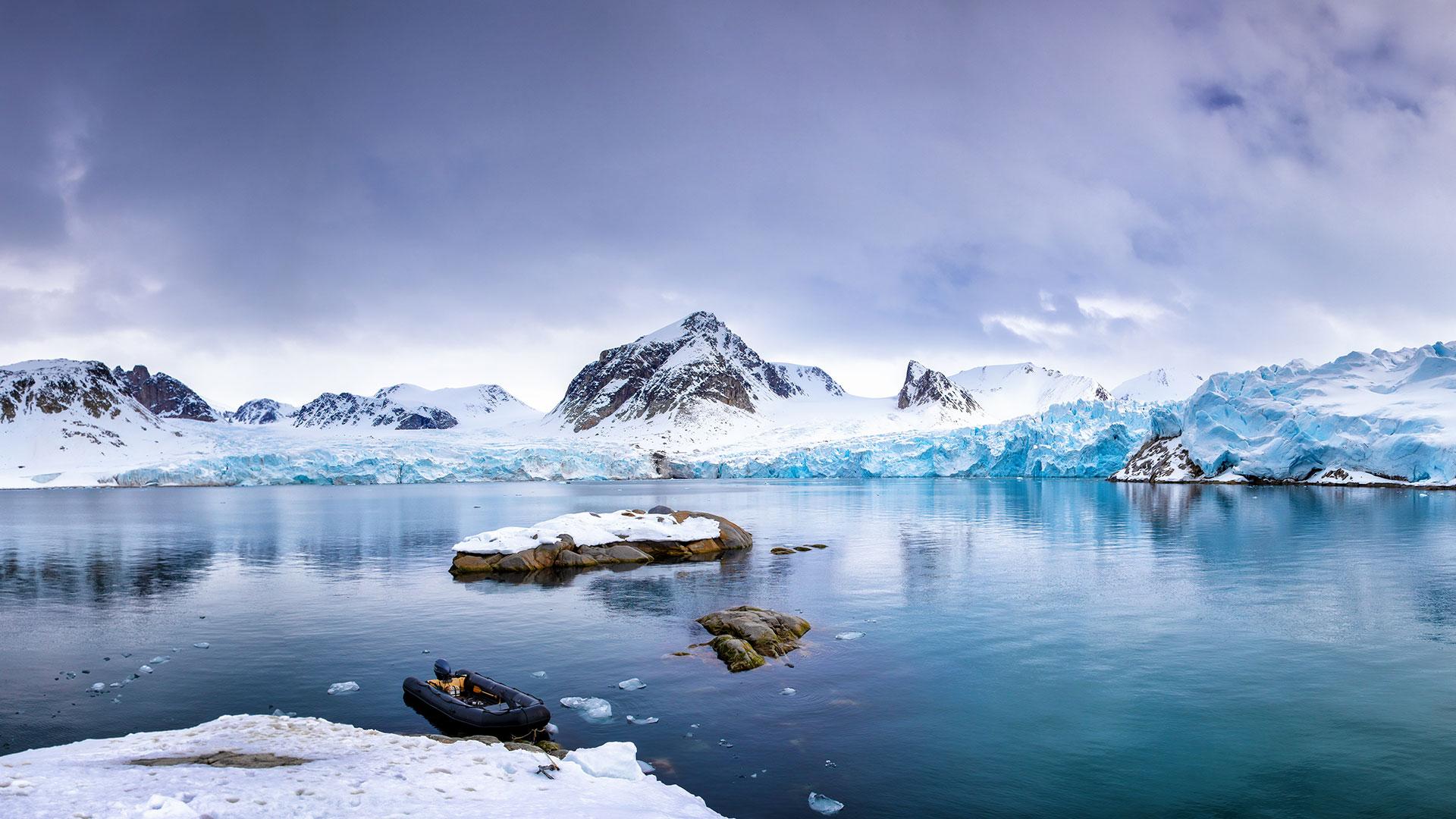
According to a new study as reported on Science Daily, a significant area of Greenland was once an ice-free tundra landscape, maybe with trees and roaming woolly mammoths, in the recent geologic past (approximately 416,000 years ago). The findings support an earlier hypothesis that a large portion of the Greenland ice sheet survived over the majority of the past 2.5 million years. Instead, from 424,000 to 374,000 years ago, there was a modest warming that resulted in substantial melting.
Despite atmospheric carbon dioxide levels at the time being far lower than they are now (280 vs. 420 ppm), heat-trapping carbon dioxide, the melting of Greenland at the time resulted in a sea level increase of at least five feet.
According to a new report, a recently discovered ice core taken from beneath Greenland’s ice sheet decades ago has revealed that a significant portion of the country was ice-free around 400,000 years ago, when temperatures were similar to those the world is approaching now. This is a startling discovery that could have catastrophic effects on sea level rise.
The discovery disproves earlier theories that the majority of Greenland’s ice sheet has been frozen for millions of years, according to the authors. Instead, the study, which was released on Thursday in the journal Science, found that moderate, natural warming resulted in widespread melting and a rise in sea level of more than 1.4 meters (4.6 feet).
[sourcelink link=”https://www.nytimes.com/2022/08/29/climate/greenland-ice-sea-levels.html”]